
The AI Trust Problem
Artificial intelligence systems are trained on massive amounts of data — often without clear permission, clear limits, or clear accountability.
People are told their data is used to “improve models,” but:
-
They can’t see when or how it’s used
-
They can’t easily opt out later
-
They can’t verify misuse
This creates public backlash, legal risk, and declining trust in AI.
The Consent-Based AI Model
Consent audit trails allow AI innovation without exploitation.
They require that:
-
AI training is a disclosed purpose
-
Permission is specific and revocable
-
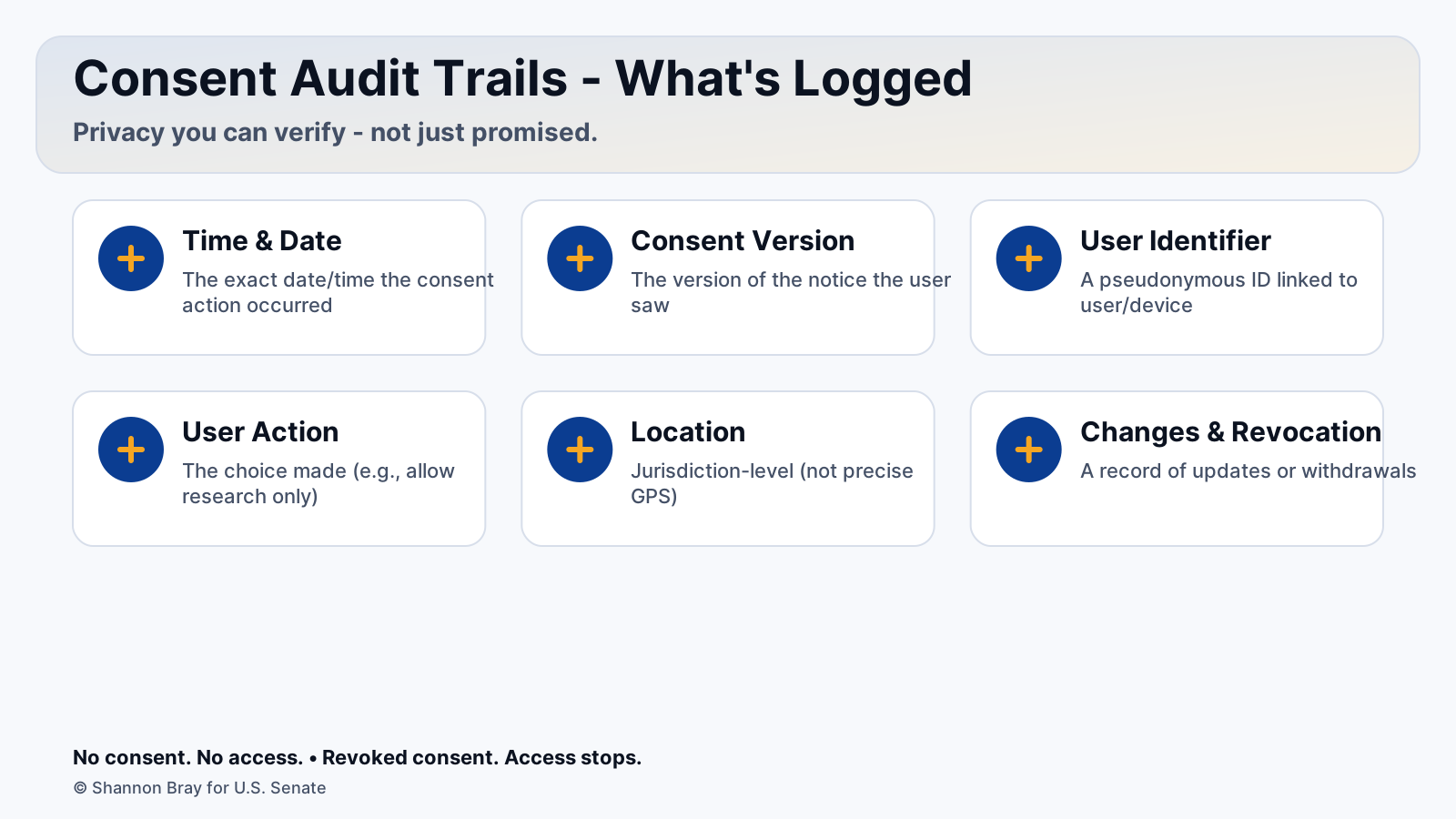
Every training use is logged
-
Continued use after revocation is prohibited
AI systems learn with consent, not assumption.
What Consent Means for AI Training
When data is used for training:
-
The purpose must be explicit (“AI model training”)
-
The scope must be defined (raw data, features, aggregates)
-
The duration must be limited
-
Reuse outside training is prohibited
No blanket permission. No silent reuse.
What Happens When Consent Is Revoked
Revoking consent does not require tearing down existing models.
Instead:
-
The data is excluded from future training runs
-
Future model updates cannot include it
-
Any continued use is logged as unauthorized
This enforces control going forward — without breaking AI systems.
Preventing Abuse Without Breaking AI
Consent audit trails encourage safer AI practices:
-
Federated learning (models learn without centralizing raw data)
-
Aggregated or anonymized training inputs
-
Secure computing environments
-
Clear training datasets with audit history
These approaches reduce risk and improve model quality.
Why This Is Better for Innovation
For AI developers:
-
Clear legal footing
-
Lower regulatory risk
-
Verifiable compliance
-
Greater public trust
For the public:
-
Transparency
-
Real choice
-
Enforceable limits
Trustworthy AI starts with enforceable consent.
Plain-English Summary
AI should learn from people — not exploit them.
Consent audit trails make that possible.
For more information, see: Data Privacy & Ownership